
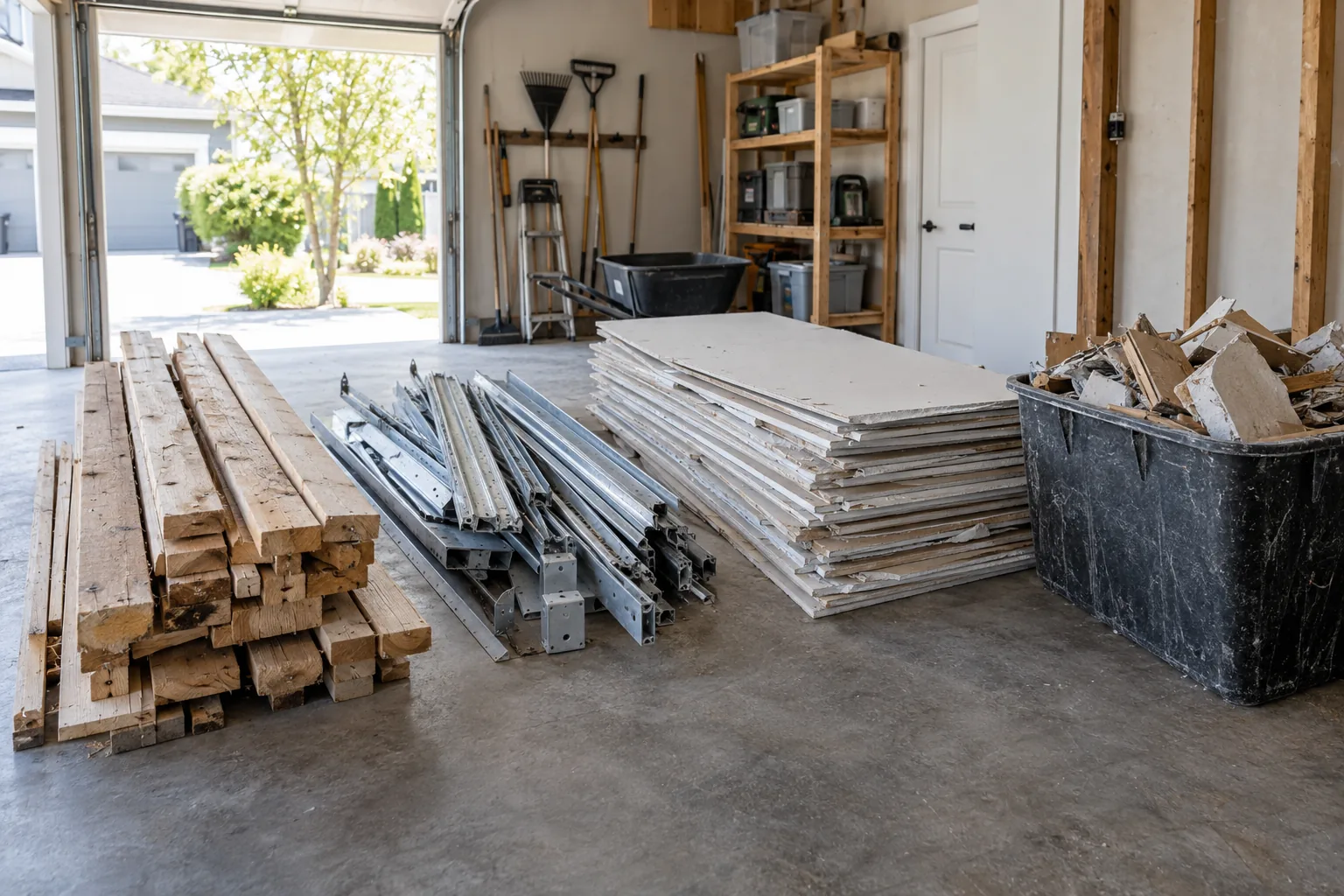
Sort by destination, not by room. Keep reusable pieces protected, separate clean recyclable material when a receiving facility accepts it, and isolate ordinary debris. Unknown liquids, suspect building materials, electronics, and regulated waste need their own verified route.
Set up a simple staging plan
| Zone | Use | Protect from |
|---|---|---|
| Reuse | Intact doors, trim, cabinets, fixtures | Rain, impact, mixed fasteners |
| Metal | Clean accepted metal components | Sharp exposed edges |
| Wood | Separated lumber with reuse or recycling path | Protruding nails and soil |
| Debris | Non-reusable approved renovation waste | Mixing with hazardous or unknown material |
Keep the path safe
Do not stage material in stairs, exits, sidewalks, or shared hallways. Keep children and pets away from the work zone. Stack long material flat and stable; do not lean heavy pieces where they can slide. Leave lifting and awkward disassembly to people with the right equipment and plan.
Verify the destination
King County’s recycling and transfer guidance varies by material and facility. Check the county’s current “What do I do with?” directory before loading, because acceptance and fees can change. Source: King County Solid Waste Division, retrieved September 24, 2026.
For a wider project plan, use the selective deconstruction checklist. Review renovation material removal and confirm what can be accepted before staging a load.