
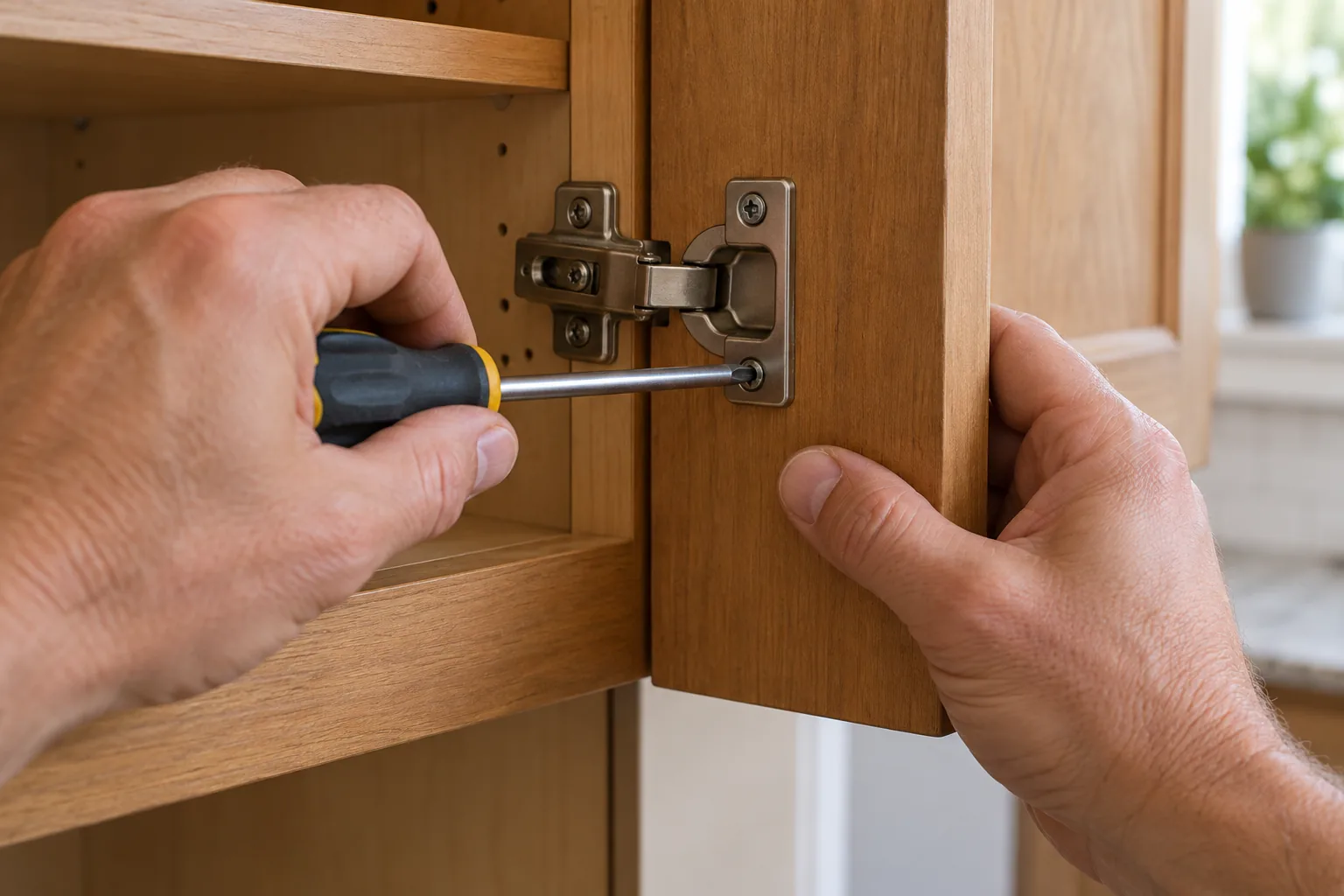
Kitchen cabinets can often be removed for reuse when the boxes are solid, fasteners are accessible, and heavy adhesive or water damage has not locked the installation in place. Reuse is a goal, not a guarantee: removal can reveal split rails, concealed screws, glued panels, or damage that was not visible beforehand.
Check the cabinets before scheduling
- Open every door and drawer; look for swelling, mold, broken joints, and pest damage.
- Photograph inside upper cabinets and under the sink.
- Measure cabinet runs and the path to the loading area.
- Remove contents, shelf liners, and personal items.
- Arrange qualified disconnection of plumbing, gas, or electrical work when required.
What improves the chance of intact removal?
| Condition | Why it matters |
|---|---|
| Screwed installation | Accessible fasteners can usually be reversed more cleanly than adhesive. |
| Separate countertop | Stone and brittle tops can add weight and breakage risk. |
| Dry cabinet boxes | Swollen particleboard and delaminated panels rarely travel well. |
| Clear carrying path | Fewer turns and obstacles reduce contact with the cabinet and home. |
Decide what happens after removal
Measure the pieces before assuming a donation or reuse outlet will accept them. Acceptance policies change and may depend on condition, age, completeness, and current demand. Confirm directly with the intended recipient before the workday.
If you are planning a larger room, use the selective deconstruction checklist. For removal availability, see kitchen deconstruction services or contact SimpleLoad.